Pages

Showing posts with label World Heritage Sites in Danger. Show all posts

Humberstone and Santa Laura Saltpeter Works Chile

Humberstone and Santa Laura works contain over 200 former saltpeter works where workers from Chile, Peru and Bolivia lived in company towns and forged a distinctive communal pampinos culture. That culture is manifest in their rich language, creativity, and solidarity, and, above all, in their pioneering struggle for social justice, which had a profound impact on social history. Situated in the remote Pampas, one of the driest deserts on Earth, thousands of pampinos lived and worked in this hostile environment for over 60 years, from 1880, to process the largest deposit of saltpeter in the world, producing the fertilizer sodium nitrate that was to transform agricultural lands in North and South America, and in Europe, and produce great wealth for Chile.

Chile Humberstone and Santa Laura Saltpeter Works
Continent: South America
Country: Chile
Category: Danger
Criterion: (II) (III) (IV)
Date of Inscription: 2005

Huge cultural exchange complex

The development of the saltpeter industry reflects the combined knowledge, skills, technology, and financial investment of a diverse community of people who were brought together from around South America, and from Europe. The saltpeter industry became a huge cultural exchange complex where ideas were quickly absorbed and exploited. The two works represent this process.
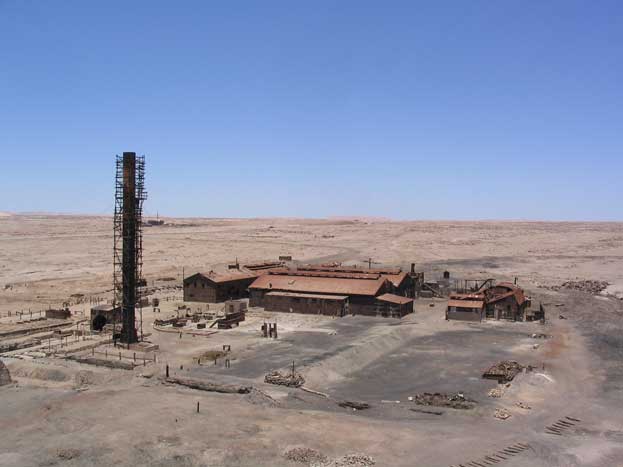
Humberstone and Santa Laura Saltpeter Works

Browse Gallery Plus UNESCO Storyline

Largest producers of natural saltpeter

The saltpeter mines and their associated company towns developed into an extensive and very distinct urban community with its own language, organisation, customs, and creative expressions, as well as displaying technical entrepreneurship. The two nominated works represent this distinctive culture.

The saltpeter mines in the north of Chile together became the largest producers of natural saltpeter in the world, transforming the Pampa and indirectly the agricultural lands that benefited from the fertilisers the works produced. The two works represent this transformation process.

Slideshow for this Heritage Site


Browse All UNESCO World Heritage Sites in . The original UNESCO inscription Here!!!

Chan Chan Archaeological Zone Peru

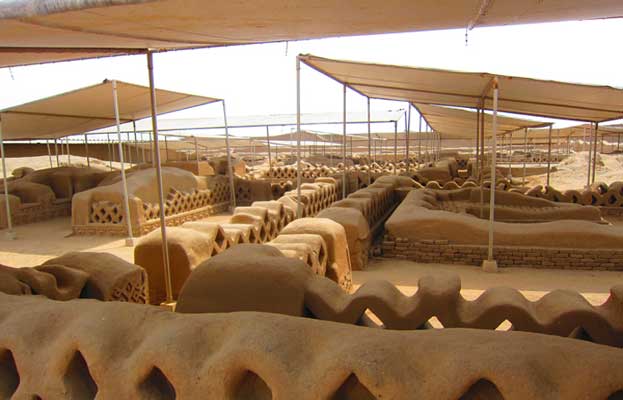
The Chimu Kingdom, with Chan Chan as its capital, reached its apogee in the 15th century, not long before falling to the Incas. The planning of this huge city, the largest in pre-Columbian America, reflects a strict political and social strategy, marked by the city's division into nine 'citadels' or 'palaces' forming autonomous units. The Chimu Kingdom reached its apogee in the 15th century, not long before falling to the Incas. Its capital Chan Chan, located in the once fertile river valley of Moche or Santa Catalina, was the largest earthen architecture city in pre-Columbian America. The remains of this vast city reflect in their layout a strict political and social strategy, emphasized by their division into nine 'citadels' or 'palaces' forming independent units. In 1986 the Chan Chan Archaeological Zone Peru inscribed as UNESCO World Heritage Sites and now it is in danger list.

Chan Chan Archaeological Zone
Continent: South America
Country: Peru
Category: Danger List
Criterion: (I)(III)
Date of Inscription: 1986

The monumental zone

The Outstanding Universal Value of Chan Chan resides in the extensive, hierarchically planned remains of this huge city, including remnants of the industrial, agricultural and water management systems that sustained it. The monumental zone of around six square kilometres in the centre of the once twenty square kilometre city, comprises nine large rectangular delineated by high thick earthen walls. Within these units, buildings including temples, dwellings and storehouses are arranged around open spaces, together with reservoirs, and funeral platforms.

Chan Chan Archaeological Zone Peru

Browse Gallery Plus UNESCO Storyline

Around the City

The earthen walls of the buildings were often decorated with friezes representing abstract motifs, and anthropomorphical and zoomorphical subjects. Around these nine complexes were thirty two semi monumental compounds and four production sectors for activities such as weaving wood and metal working. Extensive agricultural areas and a remnant irrigation system have been found further to the north, east and west of the city.

The Moche and Chicama rivers once supplied an intricate irrigation system via an approximately 80 kilometre long canal, sustaining the region around Chan Chan during the height of the Chimu civilisation.

Slideshow for this Heritage Site


Browse All UNESCO World Heritage Sites in . The original UNESCO inscription Here!!!

Fortifications on the Caribbean Side of Panama

Fortifications on the Caribbean Side of Panama is a magnificent examples of 17th- and 18th-century military architecture, these Panamanian forts on the Caribbean coast form part of the defense system built by the Spanish Crown to protect transatlantic trade. The group of 17th- and 18th-century fortifications, the historic sites of Portobelo and San Lorenzo, are outstanding examples of Spanish colonial military architecture of this period. These fortifications, imbued with history, are a magnificent example of Spanish military architecture, located in a natural setting of great beauty. Antonelli's Spanish military architecture characterizes the first construction period (1596-99) and the neoclassical style of Salas and Hernandez (1753-60) dominated afterwards.

Fortifications on the Caribbean Side of Panama
Continent: North America
Country: Panama
Category: Danger List
Criterion: (I)(IV)
Date of Inscription: 1980

Harbour Protection System

The forts, castles, barracks and batteries of Portobelo created a defensive line around the bay and protected the harbour; the works at San Lorenzo guarded the mouth of the Chagres River. Conquered by Henry Morgan in 1668 and by Admiral Edward Vernon in 1739, these fortifications were continuously rebuilt because they command the access to the Isthmus of Panama, which has always been of the utmost importance for Europe's commerce with its colonies. In 1761 the Spaniards rebuilt the fort for the third time, building the structures seen today. However, trade routes had changed and the new fort did not suffer any new attacks.

Fortifications on the Caribbean Side of Panama Heritage
The Caribbean Side of Panama Port

Browse Gallery Plus UNESCO Storyline

Help to understanding American History

The Pan American Institute of Geography and History, along with other international organizations, already recognizes the sites of Portobelo and San Lorenzo El Real to be of universal importance; they are an essential link to an understanding of American history. The forts are however in a poor state of preservation.

Slideshow for this Heritage Site


Browse All UNESCO World Heritage Sites in . The original UNESCO inscription Here!!!

Niokolo Koba National Park Senegal

Niokolo Koba National Park is located in a well-watered area along the banks of the Gambia River, the gallery forests and savannahs of Niokolo Koba National Park have a very rich fauna, among them Derby elands, chimpanzees, lions, leopards and a large population of elephants, as well as many birds, reptiles and amphibians. It is characterized by its group of ecosystems typical of this region, over an area of 913 000ha. Watered by large waterways (the Gambia, Sereko, Niokolo, Koulountou), it comprises gallery forests, savannah grass floodplains, ponds, dry forests -- dense or with clearings -- rocky slopes and hills and barren Bowés. This remarkable plant diversity justifies the presence of a rich fauna characterized by: the Derby Eland (the largest of African antelopes), chimpanzees, lions, leopards, a large population of elephants as well as many species of birds, reptiles and amphibians.

Niokolo Koba National Park
Continent: Africa
Country: Senegal
Category: Danger List
Criterion: (X)
Date of Inscription: 1981

Niokolo-Koba National Park Species

Niokolo-Koba National Park contains all the unique ecosystems of the Sudanese bioclimatic zone such as major waterways gallery-forests, herbaceous savanna floodplains, ponds, dry forests -- dense or with clearings-- rocky slopes and hills and barren Bowes. The property has a remarkable diversity of wildlife, unique in the sub-region. It counts more than 70 species of mammals, 329 species of birds, 36 species of reptiles, 20 species of amphibians and a large number of invertebrates. Lions, reputedly the largest in Africa, are a special attraction, as well as the Derby Eland, the largest antelope in existence. Other important species are also present, such as the elephant, leopard, African wild dog and chimpanzee. The wealth of habitats should be noted, along with the diversity of flora, with over 1,500 important plant species.

Niokolo Koba National Park Senegal
Niokolo Koba National Park Entrance Village

Browse Gallery Plus UNESCO Storyline

Vast land Nationalpark

Covering nearly one million hectares, the Niokolo-Koba National Park is sufficiently vast as to illustrate the major aspects of the Guinean savanna-type ecosystem, and to ensure the survival of species therein. However, reports indicate a considerable poaching of elephants. The proposed dams on the Gambia and the Niokolo-Koba are also a concern because they would have disastrous consequences for the ecological integrity of the property.

Slideshow for this Heritage Site


Browse All UNESCO World Heritage Sites in . The original UNESCO inscription Here!!!

Medieval Monuments in Kosovo Serbia

The four edifices of the site reflect the high points of the Byzantine-Romanesque ecclesiastical culture, with its distinct style of wall painting, which developed in the Balkans between the 13th and 17th centuries. The Decani Monastery was built in the mid-14th century for the Serbian king Stefan Decanski and is also his mausoleum. The Patriarchate of Peć Monastery is a group of four domed churches featuring series of wall paintings. The 13th-century frescoes of the Church of Holy Apostles are painted in a unique, monumental style. Early 14th-century frescoes in the church of the Holy Virgin of Ljevisa represent the appearance of the new so-called Palaiologian Renaissance style, combining the influences of the eastern Orthodox Byzantine and the Western Romanesque traditions. The style played a decisive role in subsequent Balkan art.

Medieval Monuments in Kosovo
Continent: Europe
Country: Serbia
Category: Danger
Criterion: (II) (III) (IV)
Date of Inscription: 2004

The Decani monastic church

The Decani monastic church is the endowment and mausoleum of Serbian King Stefan Decanski. The original founding charter from 1330 has been preserved. The construction lasted 8 years (1327-1335), and the master builder was Fra Vita, a Franciscan from Kotor. Stefan Decanski died before the construction was completed, and was buried here. Supervision of the construction works was continued by his son Dušan. The church interior was decorated at the same time, including the icons for the main iconostasis and the church furniture. The wooden throne of Hegoumenos was made around 1335, and the carved wooden sarcophagus of King Stefan Decanski around 1340.

Medieval Monuments in Kosovo Serbia

Browse Gallery Plus UNESCO Storyline

Grigorije Camblak

The writer Grigorije Camblak, author of The Life of Stefan Decanski, was the head (hegoumenos) of the Monastery at the beginning of the 15th century. Great artistic enthusiasm was brought to life in the monastery during the second half of the 16th century. This is when the painter monk Longin spent here two decades. He created some fifteen icons with depictions of the Great Feast and hermits, but his masterpiece is the icon of Stefan Decanski with scenes from the life of this sainted king.

At the close of the 17th century, the Turks plundered the monastery, but made no serious damage. During the 19th century, the monastery was restored, and new iconostases were placed on the parekklesions (side chapels) of St. Demetrius and St. Nicholas. At present, the property is used for liturgical purposes, as an Orthodox monastery with all the corresponding functions, and as a cultural and historical monument.

Slideshow for this Heritage Site


Browse All UNESCO World Heritage Sites in . The original UNESCO inscription Here!!!

Liverpool Maritime Mercantile City United Kingdom

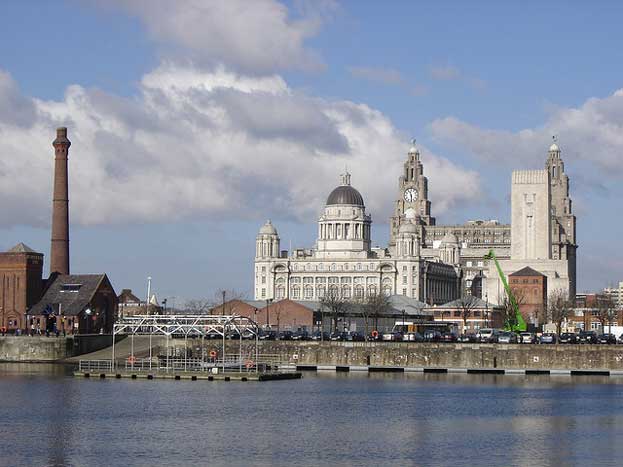
Six areas in the historic centre and docklands of Liverpool bear witness to the development of one of the world's major trading centres in the 18th, 19th and early 20th centuries. A series of significant commercial, civic and public buildings lie within these areas, including the Pier Head, with its three principal waterfront buildings - the Royal Liver Building, the Cunard Building, and Port of Liverpool Building; the Dock area with its warehouses, dock walls, remnant canal system, docks and other facilities related to port activities; the mercantile area, with its shipping offices, produce exchanges, marine insurance offices, banks, inland warehouses and merchants houses, together with the William Brown Street Cultural Quarter, including St. George's Plateau, with its monumental cultural and civic buildings.

Liverpool Maritime Mercantile City
Continent: Europe
Country: United Kingdom
Category: Danger List
Criterion: (II) (III) (IV)
Date of Inscription: 2004

The maritime mercantile City of Liverpool

Located at the tidal mouth of the river Mersey where it meets the Irish Sea, the maritime mercantile City of Liverpool played an important role in the growth of the British Empire. It became the major port for the mass movement of people, including slaves and emigrants from northern Europe to America. Liverpool was a pioneer in the development of modern dock technology, transport systems and port management, and building construction.

Liverpool Maritime Mercantile City Heritage
Liverpool Maritime Mercantile City

Browse Gallery Plus UNESCO Storyline

The supreme example of a commercial port

Liverpool - Maritime Mercantile City reflects the role of Liverpool as the supreme example of a commercial port at the time of Britain's greatest global influence. Liverpool grew into a major commercial port in the 18th century, when it was also crucial for the organisation of the trans-Atlantic slave trade. In the 19th century, Liverpool became a world mercantile centre for general cargo and mass European emigration to the New World. It had major significance on world trade as one of the principal ports of the British Commonwealth.

Its innovative techniques and types of dock, dock facilities and warehouse construction had worldwide influence. Liverpool was instrumental in the development of industrial canals in the British Isles in the 18th century, and of railway transport in the 19th century. All through this period, and particularly in the 19th and early 20th centuries, Liverpool gave attention to the quality and innovation of its architecture and cultural activities.

Slideshow for this Heritage Site


Browse All UNESCO World Heritage Sites in . The original UNESCO inscription Here!!!

Historic Town of Zabid Yemen

Zabid's domestic and military architecture and its urban plan make it an outstanding archaeological and historical site. Besides being the capital of Yemen from the 13th to the 15th century, the city played an important role in the Arab and Muslim world for many centuries because of its Islamic university. Historic Town of Zabid is one of the coastal towns in Tehama area west of Yemen, sitting on a rise above the river junction and the fertile flood plain. It is a circular fortified town with four remaining gates, which was supplied with water by extensive canals. It was already flourishing when Islam was established in the region in the 7th century. Its development is due to Ibn Ziyad (the founder of the Zyadite dynasty), who was sent to the region by the Caliph al-Mamun in 820 AD to quell a rebellion.

Historic Town of Zabid Yemen
Continent: Asia
Country: Yemen
Category: Danger List
Criterion: (II)(IV) (VI)
Date of Inscription: 1993

Highest mosques in Yemen

The core of the town is its first mosque, Asair. The Great Mosque lies to the west of the town to which spread the souq. Zabid has the highest concentration of mosques in Yemen, some 86 in all, mainly simple brick structures but some with elaborate carved brick and stucco decoration. Fourteen of these date to the Rasulid period - all of them madrasas - and are the largest group of buildings from this period in Yemen.

Historic Town of Zabid Yemen Heritage
Zabid Historic Building

Browse Gallery Plus UNESCO Storyline

Outstanding visual qualities

A network of narrow alleys spreads over the town and its vernacular buildings, typical of the southern Arabian Peninsula, give the town outstanding visual qualities. The houses, built of burnt brick, display similar plans with a reception room, murabba, opening onto an enclosed yard. The larger houses extend upwards to two or three storeys and have fine, elaborate interiors with skilfully carved brick walls, niches and ceilings.

The city with its narrow closed streets, traditional houses and minarets is an outstanding example of a homogeneous architectural ensemble that reflects the spatial characteristics of the early years of Islam. Around the town are cemeteries, notably the one to the north-west with a mosque, a well and shady trees.

Slideshow for this Heritage Site


Browse All UNESCO World Heritage Sites in . The original UNESCO inscription Here!!!

Coro and its Port Venezuela

Coro and its Port earthen constructions unique to the Caribbean, Coro are the only surviving example of a rich fusion of local traditions with Spanish Mudejar and Dutch architectural techniques. One of the first colonial towns (founded in 1527), it has some 602 historic buildings. Coro is an outstanding example of a historic town, dating from the earliest years of Spanish colonization on the Caribbean coast of South America, which has conserved its original layout and early urban landscape to a remarkable degree. It is the only surviving example of a remarkable fusion of styles over time, and is also important for the large number of ecclesiastical buildings and ensembles that it contains. Although a number of the Spanish colonial settlements on this coast, such as Maracaibo, were originally primarily of earthen construction, Coro is the only one in which such structures have survived intact to the present day.

Coro and its Port Venezuela
Continent: South America
Country: Venezuela
Category: Danger List
Criterion: (IV)(V)
Date of Inscription: 1993

Coro is the largest town

Santa Ana de Coro is the largest town with buildings of earthen construction in Venezuela, and one of the most important in the Caribbean region. Unlike other towns in this coast, even its public buildings are of earthen construction, not stone. In this, and in its plan, deriving from the towns of Andalusia and the Canary Islands of the 15th century, it exercised considerable influence over other settlements in the region.

Coro and its Port Venezuela Heritage
Coro The Present day Building

Browse Gallery Plus UNESCO Storyline

Founded in 1527

The city of Coro was founded in 1527 by the expedition sent from Santo Domingo by Juan de Ampies, factor of the Spanish Crown there. Before the arrival of the Spaniards, the area was inhabited by Caquetios Indians, who irrigated the lands by means of a large channel from a dam on the Coro River, which explains the choice of site. The settlement acquired legal status with the creation of a municipal council in 1529.

Slideshow for this Heritage Site


Browse All UNESCO World Heritage Sites in . The original UNESCO inscription Here!!!

Salonga National Park Democratic Republic of the Congo

Salonga National Park is Africa's largest tropical rainforest reserve. Situated at the heart of the central basin of the Congo river, the park is very isolated and accessible only by water. It is the habitat of many endemic endangered species, such as the dwarf chimpanzee, the Congo peacock, the forest elephant and the African slender-snouted or 'false' crocodile. At the heart of the central basin of the River Congo, Salonga National Park is the largest protected area of dense rainforest on the African continent (when considering the two disjointed sectors of the Park). Very isolated and only accessible by water transport, this vast Park (3,600,000 ha) contains the important evolution of both species and communities in a forest area still relatively intact. Playing also the fundamental role for the climate regulation and the sequestration of carbon, it constitutes the habitat of numerous threatened species such as the pygmy chimpanzee (or bonobo), the bush elephant and the Congo peacock.

Salonga National Park Congo
Continent: Africa
Country: Democratic Republic of the Congo
Category: Danger List
Criterion: (VII) (IX)
Date of Inscription: 1984

Vast marshland areas

Salonga National Park represents one of the very rare existing biotopes absolutely intact in central Africa. Moreover, it comprises vast marshland areas and practically inaccessible gallery forests, which have never been explored and may still be considered as practically virgin. The plant and animal life in Salonga National Park constitute an example of biological evolution and the adaptation of life forms in a complex equatorial rainforest environment. The large size of the Park ensures the continued possibility for evolution of both species and biotic communities within the relatively undisturbed forest.

Salonga National Park Congo Heritage
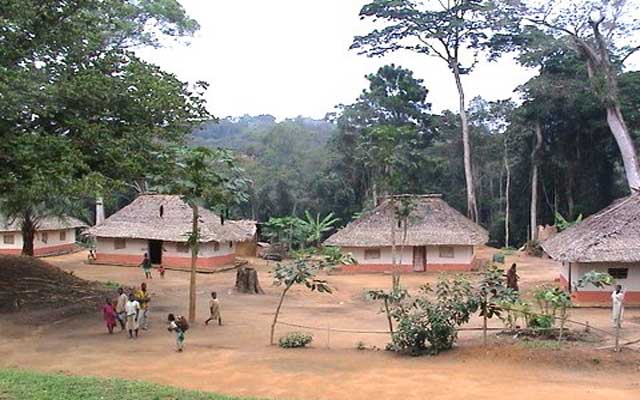
Interior Village

Browse Gallery Plus UNESCO Storyline

Divided by two sectors

Salonga National Park, created in 1970, with an area of 3,334,600 ha, is divided into two sectors (North and South) by a corridor outside the Park of about forty km wide. The Park is one of the most extensive in the world and its area is sufficiently important to offer viable habitats to its fauna and flora. The fact that the Park is divided into two distinct sectors suggests that biological corridors must be foreseen in the unlisted portion between the two sectors, to create an ecological liaison between these two zones.

Roughly one third of the southern sector of the Park is occupied by groups of pygmies and a part of this occupied land is claimed by the local population. The boundaries of the property are intact due to the existence of major rivers that form recognized, precise and natural boundaries and this despite the presence of some villages inside the Park.

Slideshow for this Heritage Site


Browse All UNESCO World Heritage Sites in . The original UNESCO inscription Here!!!

Ashur Iraq

The ancient city of Ashur is located on the Tigris River in northern Mesopotamia in a specific geo-ecological zone, at the borderline between rain-fed and irrigation agriculture. The city dates back to the 3rd millennium BC. From the 14th to the 9th centuries BC it was the first capital of the Assyrian Empire, a city-state and trading platform of international importance. It also served as the religious capital of the Assyrians, associated with the god Ashur. The city was destroyed by the Babylonians, but revived during the Parthian period in the 1st and 2nd centuries AD. The history of the city of Ashur goes back to the Sumerian Early Dynastic period (first half of the 3rd millennium BCE). Some remains may even date to preceding periods. For this early part the stratigraphic excavation of the temple of Ishtar provided substantial information about the development of the religious architecture. Two of the five major building stages of it belong to this period.

Ashur Iraq
Continent: Asia
Country: Iraq
Category: Danger List
Criterion: (III) (IV)
Date of Inscription: 2003

Capital of Assyria

During the Akkadian empire Ashur was an important centre, and a governor of the third dynasty of Ur ruled over the city which had to pay taxes to the central administration in the south. Still, the temple of Ishtar and its findings remain the main archaeological reference point. As an independent citystate Ashur became capital of Assyria and the Assyrians during the 2nd millennium BCE starting with the Old- Assyrian rulers Erishum, Ilushuma and Shamshi-Adad I and thereafter with the Middle-Assyrian kings Eriba- Adad I and Ashuniballit I.

Ashur Iraq Heritage
Ashur Iraq

Browse Gallery Plus UNESCO Storyline

Political capital

Ashur remained political capital until the reign of the Neo- Assyrian king Ashurnasirpal II (883-859 BCE), who moved it to Kalhu (modern Nimrud). After that, Ashur continued to be an important religious and provincial Assyrian centre even though it had lost its function as national capital.

The Neo-Assyrian kings executed restoration work at the main sanctuaries and palaces of Ashur as it was requested by the inscriptions of their predecessors and erected the royal burial place within the area of the Old royal palace.

Slideshow for this Heritage Site


Browse All UNESCO World Heritage Sites in . The original UNESCO inscription Here!!!

Bam and its Cultural Landscape Iran

Bam and its Cultural Landscape are situated in a desert environment on the southern edge of the Iranian high plateau. The origins of Bam can be traced back to the Achaemenid period (6th to 4th centuries BC). Its heyday was from the 7th to 11th centuries, being at the crossroads of important trade routes and known for the production of silk and cotton garments. The existence of life in the oasis was based on the underground irrigation canals, the qanāts, of which Bam has preserved some of the earliest evidence in Iran. Arg-e Bam is the most representative example of a fortified medieval town built in vernacular technique using mud layers.Bam developed at the crossroads of important trade routes at the southern side of the Iranian high plateau, and it became an outstanding example of the interaction of the various influences.

Bam and its Cultural Landscape
Continent: Asia
Country: Iran
Category: Danger List
Criterion: (I) (II) (III) (IV) (V)
Date of Inscription: 2004

Mud layer technique

The Bam and its Cultural Landscape represents an exceptional testimony to the development of a trading settlement in the desert environment of the Central Asian region. The city of Bam represents an outstanding example of a fortified settlement and citadel in the Central Asian region, based on the use mud layer technique combined with mud bricks.

Bam and its Cultural Landscape Heritage
Bam and its Cultural Landscape

Browse Gallery Plus UNESCO Storyline

Man and nature in a desert environment

The cultural landscape of Bam is an outstanding representation of the interaction of man and nature in a desert environment, using the qanats. The system is based on a strict social system with precise tasks and responsibilities, which have been maintained in use until the present, but has now become vulnerable to irreversible change.

Slideshow for this Heritage Site


Browse All UNESCO World Heritage Sites in . The original UNESCO inscription Here!!!

Samarra Archaeological City Iraq

Samarra Archaeological City is the site of a powerful Islamic capital city that ruled over the provinces of the Abbasid Empire extending from Tunisia to Central Asia for a century. Located on both sides of the River Tigris 130 km north of Baghdad, the length of the site from north to south is 41.5 km; its width varying from 8 km to 4 km. It testifies to the architectural and artistic innovations that developed there and spread to the other regions of the Islamic world and beyond. The 9th-century Great Mosque and its spiral minaret are among the numerous remarkable architectural monuments of the site, 80% of which remain to be excavated.

Samarra Archaeological City
Continent: Asia
Country: Iraq
Category: Danger List
Criterion: (II) (III) (IV)
Date of Inscription: 2011

Outstanding evidence of the Abbasid Caliphate

The ancient capital of Samarra dating from 836-892 provides outstanding evidence of the Abbasid Caliphate which was the major Islamic empire of the period, extending from Tunisia to Central Asia. It is the only surviving Islamic capital that retains its original plan, architecture and arts, such as mosaics and carvings. Samarra has the best preserved plan of an ancient large city, being abandoned relatively early and so avoiding the constant rebuilding of longer lasting cities.

Samarra was the second capital of the Abbasid Caliphate after Baghdad. Following the loss of the monuments of Baghdad, Samarra represents the only physical trace of the Caliphate at its height.

Samarra Archaeological City Heritage
Samarra Archaeological City

Browse Gallery Plus UNESCO Storyline

The most unusual minarets

The city preserves two of the largest mosques (Al-Malwiya and Abu Dulaf) and the most unusual minarets, as well as the largest palaces in the Islamic world (the Caliphal Palace Qasr al-Khalifa, al-Ja'fari, al Ma'shuq, and others). Carved stucco known as the Samarra style was developed there and spread to other parts of the Islamic world at that time. A new type of ceramic known as Lustre Ware was also developed in Samarra, imitating utensils made of precious metals such as gold and silver.

Slideshow for this Heritage Site


Browse All UNESCO World Heritage Sites in . The original UNESCO inscription Here!!!

Manovo-Gounda St Floris National Park Central African Republic

The importance of this park derives from its wealth of flora and fauna. Its vast savannahs are home to a wide variety of species: black rhinoceroses, elephants, cheetahs, leopards, wild dogs, red-fronted gazelles and buffalo, while various types of waterfowl are to be found in the northern floodplains. With an area of 1,740,000 ha, Manovo-Gounda St Floris is the largest park in the Central African savannas. Straddling the two ecological zones, Manovo-Gounda St Floris National Park owes its importance to its rich flora and fauna. It is home to many endangered species including the black rhino, elephant, hippopotamus and red-fronted gazelle as well as large concentrations of herbivores. This Park is an interesting example of a "crossroads" where the species from savanna communities of East and West Africa, as well as those of the forest communities of the South, cross paths. The Park is a valuable area for the study of environmental changes occurring throughout the Sahel and Sudan under pressure from drought and overgrazing.

Manovo Gounda St Floris National Park
Continent: Africa
Country: Central African Republic
Category: Danger List
Criterion: (IX)(X)
Date of Inscription: 1988

Extraordinary natural formations

The Manovo Gounda St Floris National Park contains extraordinary natural formations. The Park straddles the Sudano-Sahelian and Sudano-Guinean biogeographical zones. This results in a variety of habitats from grassy plains in the north to savannas with gallery forests in the south. The property encompasses the entire watershed of three major rivers (Manovo, Koumbala and Gounda) with grassy floodplains and wetlands. The plains are interspersed with small granitary inselbergs with, to the south, the rugged sandstone massif of the Bongos.

Manovo Gounda St Floris National Park Heritage
Rhinoceros

Browse Gallery Plus UNESCO Storyline

Hunting areas

This vast Park, surrounded by hunting areas and with a functional corridor to the National Park of Bamingui-Bangoran, protects the largest savanna of Central Africa. It represents a unique example of this type of ecosystem, home to viable populations of different species typical of this part of Africa and others from East and West Africa.

Slideshow for this Heritage Site


Browse All UNESCO World Heritage Sites in . The original UNESCO inscription Here!!!

Mount Nimba Strict Nature Reserve Ivory Coast

Mount Nimba Strict Nature Reserve is located on the borders of Guinea, Liberia and Ivory Coast, Mount Nimba rises above the surrounding savannah. Its slopes are covered by dense forest at the foot of grassy mountain pastures. They harbour an especially rich flora and fauna, with endemic species such as the viviparous toad and chimpanzees that use stones as tools. A veritable water tower with about fifty springs between the Ivory Coast and Guinea, the Mount Nimba Strict Nature Reserve is dominated by a chain of mountains that culminate at 1,752 m altitude at Mount Nimba. The slopes, covered with dense forest at the lower levels, with grassy mountain pastures, overflow with particularly rich endemic flora and fauna. Extending over a total of area of 17,540 ha, with 12,540 ha in Guinea and 5,000 ha in Côte d'Ivoire, the property is integrated into the public domain of the two States.

Mount Nimba Strict Nature Reserve
Continent: Africa
Country: Ivory Coast
Category: Danger List
Criterion: (IX)(X)
Date of Inscription: 1981

Original and diverse species

This Reserve contains original and diverse species of the most remarkable animal and plant populations, not only in West Africa, but also in the entire African continent; notably threatened species such as the Micropotamogale of Mount Nimba , the viviparous toad of Mount Nimba and chimpanzees that use stones as tools.

Mount Nimba Strict Nature Reserve Heritage
Mountainous village

Browse Gallery Plus UNESCO Storyline

Rare mountain chains of West Africa

The site is the rare mountainous chains of West Africa; Mount Nimba rises abruptly to an altitude of 1,752 m above a rolling panorama and giving way to forested plains at the lower altitudes. It is an isolated refuge covered with montane forests, making the landscape of the Gulf of Guinea an exceptional site from the ecological perspective. Its geomorphological characteristics and its sub-equatorial montane climate of strong seasonal and altitudinal contrasts produce a rich variety of microclimates. This latter factor has contributed to the individualization of an insolite plant and fauna population, as well as a dynamic and exceptionally varied ecosystem.

Slideshow for this Heritage Site


Browse All UNESCO World Heritage Sites in . The original UNESCO inscription Here!!!

Okapi Wildlife Reserve Democratic Republic of the Congo

The Okapi Wildlife Reserve occupies about one-fifth of the Ituri forest in the north-east of the Democratic Republic of the Congo. The Congo River basin, of which the reserve and forest are a part, is one of the largest drainage systems in Africa. The reserve contains threatened species of primates and birds and about 5,000 of the estimated 30,000 okapi surviving in the wild. It also has some dramatic scenery, including waterfalls on the Ituri and Epulu rivers. The reserve is inhabited by traditional nomadic pygmy Mbuti and Efe hunters. Okapi Wildlife Reserve contains flora of outstanding diversity and provides refuge to numerous endemic and threatened species, including one-sixth of the existing Okapi population. The Reserve protects one-fifth of the Ituri forest, a Pleistocene refuge dominated by dense evergreen « Mbau » and humid semi-evergreen forests, combined with swamp forests that grow alongside the waterways, and clearings called locally « edos » and inselbergs.

Okapi Wildlife Reserve
Continent: Africa
Country: Democratic Republic of the Congo
Category: Danger List
Criterion: (X)
Date of Inscription: 1996

Why Okapi Wildlife Reserve in danger?

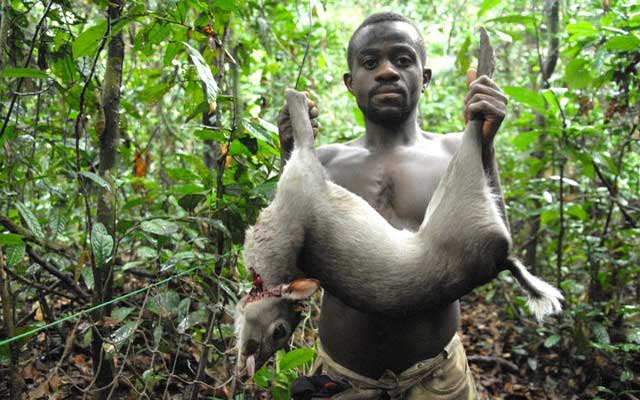
This includes a fully protected core zone of 282,000 ha comprising 20% of the Reserve where all hunting is prohibited, and an area of 950,000 ha for traditional use, where self-regulated hunting; using traditional methods; is authorized to cover the basic needs of the human population of the Reserve in forest products. Permanent installations and agricultural clearing are authorized in the 18,000 ha development area that comprises a narrow band on each side of the No. 4 national road crossing through the central part of the Reserve, and along a secondary road that links Mambasa to Mungbere, at the eastern border of the property. There are plans to make the whole protected area a national park. A buffer zone of 50 km wide has been defined around the entire Reserve.

Okapi Wildlife Reserve Heritage
Self-Regulated Hunting

Browse Gallery Plus UNESCO Storyline

The Reserve Species

The Reserve contains 101 mammal species and 376 species of documented birds. The population of the endemic species of Okapi (Okapia johnstoni), a forest giraffe, is estimated at 5,000 individuals. Among the endemic mammals of the forest in the north-east of the DRC identified in the Reserve, are the aquatic genet (Osbornictis piscivora) and the giant genet (Genetta victoriae). The Reserve provides refuge to 17 species of primates (including 13 diurnal and 4 nocturnal), the highest number for an African forest, including 7,500 chimpanzees (Pan troglodytes).

Slideshow for this Heritage Site


Browse All UNESCO World Heritage Sites in . The original UNESCO inscription Here!!!

Ruins of Kilwa Kisiwani and Ruins of Songo Mnara Tanzania

Ruins of Kilwa Kisiwani and Ruins of Songo Mnara is the remains of two great East African ports admired by early European explorers are situated on two small islands near the coast. From the 13th to the 16th century, the merchants of Kilwa dealt in gold, silver, pearls, perfumes, Arabian crockery, Persian earthenware and Chinese porcelain; much of the trade in the Indian Ocean thus passed through their hands. The site located on two islands close to each other just off the Tanzanian coast about 300km south of Dar es Salaam are the remains of two port cites, Kilwa Kisiwani and Songo Mnara. The larger, Kilwa Kisiwani, was occupied from the 9th to the 19th century and reached its peak of prosperity in the13th and 14th centuries. In 1331-1332, the great traveler, Ibn Battouta made a stop here and described Kilwa as one of the most beautiful cities of the world.

Ruins of Kilwa Kisiwani and Ruins of Songo Mnara
Continent: Africa
Country: Tanzania
Category: Danger List
Criterion: (III)
Date of Inscription: 1981

Kilwa Kisiwani and Songo Mnara trading cities

Kilwa Kisiwani and Songo Mnara were Swahili trading cities and their prosperity was based on control of Indian Ocean trade with Arabia, India and China, particularly between the 13th and 16th centuries, when gold and ivory from the hinterland was traded for silver, carnelians, perfumes, Persian faience and Chinese porcelain. Kilwa Kisiwani minted its own currency in the 11th to 14th centuries. In the 16th century, the Portuguese established a fort on Kilwa Kisiwani and the decline of the two islands began.

Ruins of Kilwa Kisiwani and Ruins of Mnara Heritage
Ruins of Kilwa Kisiwani

Browse Gallery Plus UNESCO Storyline

The remains of Kilwa Kisiwani

The remains of Kilwa Kisiwani cover much of the island with many parts of the city still unexcavated. The substantial standing ruins, built of coral and lime mortar, include the Great Mosque constructed in the 11th century and considerably enlarged in the 13th century, and roofed entirely with domes and vaults, some decorated with embedded Chinese porcelain; the palace Husuni Kubwa built between c1310 and 1333 with its large octagonal bathing pool; Husuni Ndogo, numerous mosques, the Gereza (prison) constructed on the ruins of the Portuguese fort and an entire urban complex with houses, public squares, burial grounds, etc.

The ruins of Songo Mnara, at the northern end of the island, consist of the remains of five mosques, a palace complex, and some thirty-three domestic dwellings constructed of coral stones and wood within enclosing walls.

Slideshow for this Heritage Site


Browse All UNESCO World Heritage Sites in . The original UNESCO inscription Here!!!

Tombs of Buganda Kings at Kasubi Uganda

The Tombs of Buganda Kings at Kasubi constitute a site embracing almost 30 ha of hillside within Kampala district. Most of the site is agricultural, farmed by traditional methods. At its core on the hilltop is the former palace of the Kabakas of Buganda, built in 1882 and converted into the royal burial ground in 1884. Four royal tombs now lie within the Muzibu Azaala Mpanga, the main building, which is circular and surmounted by a dome. It is a major example of an architectural achievement in organic materials, principally wood, thatch, reed, wattle and daub. The site's main significance lies, however, in its intangible values of belief, spirituality, continuity and identity. The Tombs of Buganda Kings constitute a site embracing 26.8 hectares of Kasubi hillside within Kampala City.

Tombs of Buganda Kings at Kasubi Uganda
Continent: Africa
Country: Uganda
Category: Danger List
Criterion: (I)(III) (IV) (VI)
Date of Inscription: 2001

Major spiritual centre for the Baganda

The site is the major spiritual centre for the Baganda where traditional and cultural practices have been preserved. The Kasubi Tombs are the most active religious place in the kingdom, where rituals are frequently performed. Its place as the burial ground for the previous four kings (Kabakas) qualifies it as a religious centre for the royal family, a place where the Kabaka and his representatives carry out important rituals related to Buganda culture. The site represents a place where communication links with the spiritual world are maintained.

Tombs of Buganda Kings at Kasubi Heritage
Tombs of Buganda Kings at Kasubi

Browse Gallery Plus UNESCO Storyline

Tomb buildings

Its spatial organization, starting from the border of the site marked with the traditional bark cloth trees, leading through the gatehouse, the main courtyard, and culminating in the large thatched building, housing the tombs of the four Kabakas, represents the best existing example of a Baganda palace/burial site.

At its core on the hilltop is the main tomb building, locally referred to as the "Muzibu-Azaala-Mpanga" which is a masterpiece of this ensemble. A tomb building has been in existence since the 13th century. The latest building was the former palace of the Kabakas of Baganda, built in 1882 and converted into the royal burial ground in 1884. Four royal tombs now lie within the Muzibu-Azaala-Mpanga.

Slideshow for this Heritage Site


Browse All UNESCO World Heritage Sites in . The original UNESCO inscription Here!!!

Tropical Rainforest Heritage of Sumatra Indonesia

Tropical Rainforest Heritage of Sumatra Indonesia, the 2.5 million hectare Tropical Rainforest Heritage of Sumatra site comprises three national parks: Gunung Leuser National Park, Kerinci Seblat National Park and Bukit Barisan Selatan National Park. The site holds the greatest potential for long-term conservation of the distinctive and diverse biota of Sumatra, including many endangered species. The protected area is home to an estimated 10,000 plant species, including 17 endemic genera; more than 200 mammal species; and some 580 bird species of which 465 are resident and 21 are endemic. Of the mammal species, 22 are Asian, not found elsewhere in the archipelago and 15 are confined to the Indonesian region, including the endemic Sumatran orang-utan. The site also provides biogeographic evidence of the evolution of the island.

Tropical Rainforest Heritage of Sumatra Indonesia
Continent: Asia
Country: Indonesia
Category: Danger
Criterion: (VII)(IX) (X)
Date of Inscription: 2004

Andes of Sumatra

The parks that comprise the Tropical Rainforest Heritage of Sumatra are all located on the prominent main spine of the Bukit Barisan Mountains, known as the 'Andes of Sumatra'. Outstanding scenic landscapes abound at all scales. The mountains of each site present prominent mountainous backdrops to the settled and developed lowlands of Sumatra. The combination of the spectacularly beautiful Lake Gunung Tujuh (the highest lake in southeast Asia), the magnificence of the giant Mount Kerinci volcano, numerous small volcanic, coastal and glacial lakes in natural forested settings, fumaroles belching smoke from forested mountains and numerous waterfalls and cave systems in lush rainforest settings, emphazise the outstanding beauty of the Tropical Rainforest Heritage of Sumatra.

Tropical Rainforest Heritage of Sumatra
Baby Tigers: Tropical Rainforest of Sumatra

Browse Gallery Plus UNESCO Storyline

The Tropical Rainforest Heritage

The Tropical Rainforest Heritage of Sumatra represent the most important blocks of forest on the island of Sumatra for the conservation of the biodiversity of both lowland and mountain forests. This once vast island of tropical rainforest, in the space of only 50 years, has been reduced to isolated remnants including those centred on the three nominated sites. The Leuser Ecosystem, including the Gunung Leuser National Park, is by far the largest and most significant forest remnant remaining in Sumatra. All three parks would undoubtedly have been important climatic refugia for species over evolutionary time and have now become critically important refugia for future evolutionary processes.

All three parks that comprise the Tropical Rainforest Heritage of Sumatra are areas of very diverse habitat and exceptional biodiversity. Collectively, the three sites include more than 50% of the total plant diversity of Sumatra. At least 92 local endemic species have been identified in Gunung Leuser National Park. The nomination contains populations of both the world's largest flower (Rafflesia arnoldi) and the tallest flower (Amorphophallus titanium). The relict lowland forests in the nominated sites are very important for conservation of the plant and animal biodiversity of the rapidly disappearing lowland forests of South East Asia. Similarly, the montane forests, although less threatened, are very important for conservation of the distinctive montane vegetation of the property.

Slideshow for this Heritage Site


Browse All UNESCO World Heritage Sites in . The original UNESCO inscription Here!!!

Abu Mena Egypt

Abu Mena is located south of Alexandria, between Wadi el-Natrun and Alexandria itself. The church, baptistry, basilicas, public buildings, streets, monasteries, houses and workshops in this early Christian holy city were built over the tomb of the martyr Menas of Alexandria, who died in AD 296. Built in the 3rd century, the monastery commemorates an Alexandrine soldier, Menas, who was an officer in Diocletian's army. Menas refused to kill any Christian after his army won. He declared his Christianity publicly, which was a tremendous motive for other Christians to bear the suffering and abuse from Diocletian's army. Legend has it that Menas's remains were brought back from Phrygia by camel and were buried where the animal refused to walk any more. Water welled up in the desert at that spot, filling the area with vines and olive trees, as a result of which it is known as St Menas's Vineyards.

Abu Mena Egypt
Continent: Africa
Country: Egypt
Category: Danger List
Criterion: (IV)
Date of Inscription: 1979

Pilgrimage city

Archaeological excavations since 1900 have revealed that Abu Mena grew rapidly in the course of the 5th and 6th centuries. By 600 the oasis had become a pilgrimage city, centred on the great basilica complex. Archaeological excavations revealed an entire town with houses and cemeteries. They even found the house of the potters who made flasks, their shop, and the remains of some flasks, lamps and toys.

Abu Mena Egypt Heritage
Modern Monastery Abu Mena Egypt

Browse Gallery Plus UNESCO Storyline

Encourage for Christian Pilgrims

Built in the 5th century to accommodate the increasing number of Christian pilgrims, the Thermal Basilica used to store the curative waters used for the heated baths and pools surrounding the basilica. Pilgrims would fill small clay flasks (ampullae) with water from the basilica. The flasks were stamped with the seal of St Menas, showing the martyr standing between two kneeling camels. During the 5th and 6th centuries many buildings were erected around the Thermal Basilica, including a monastery on its north side.

Slideshow for this Heritage Site


Browse All UNESCO World Heritage Sites in . The original UNESCO inscription Here!!!